Thailand
Thailand's data centre boom tests its infrastructure limits
A new poll of Thai entrepreneurs highlights the tension between rapid data centre growth and the country's water and power infrastructure. The test is not just about resources, but coordination.
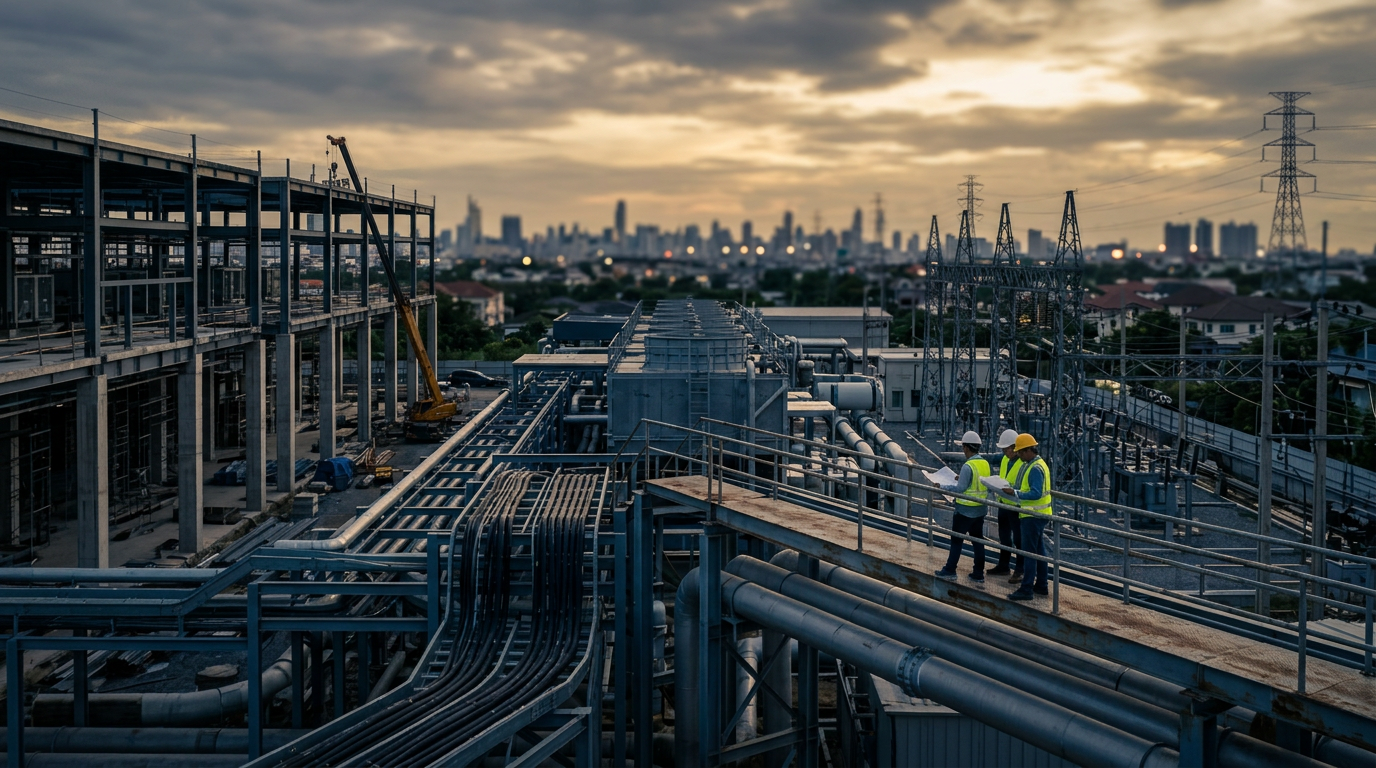
An August poll from the Federation of Thai Industries (FTI) highlights a growing concern among Thai entrepreneurs: the country's impressive growth in data centres may be straining its water and energy resources. The survey, reported by the Bangkok Post, indicates that while business leaders welcome the investment, they are wary of its potential to worsen water scarcity.
This situation is not unique to Thailand. Across Southeast Asia, the race to build the digital economy's backbone is running into physical-world constraints. The core of the issue is not just a shortage of power or water, but a deficit in coordination.
The Coordination Deficit
Data centres are immense consumers of power and water, not only for computation but also for cooling. Their location decisions are complex, involving calculations on land cost, fiber optic connectivity, and the price and reliability of electricity. When these projects are developed in isolation from national utility and water management planning, they create predictable bottlenecks.
As discussed in ASEAN Rising, Singapore's success as a data hub is a direct result of its integrated approach. The city-state treats infrastructure planning as a holistic exercise, ensuring that power, water, and connectivity are developed in concert. This perspective sees coordinated capital as a strategic advantage. As the book notes, "Capital coordination is itself an industrial input." When utilities and planning move together, large-scale investment follows. Where they do not, even abundant natural resources cannot guarantee a project's viability.
A Regional Test Case
Thailand's experience serves as a test case for other ASEAN nations eager to attract digital investment. The FTI poll reflects a mature understanding of this trade-off. The concern is not that data centres are undesirable, but that their development must be managed with a view to the entire system. A data centre that causes power outages or draws down public water reserves is a net loss, regardless of its nameplate capacity.
This requires a shift in mindset from simply attracting investors to co-developing infrastructure. It means government agencies for energy, water, and investment promotion must work from a common blueprint. For investors, it means looking beyond cheap land or power and assessing the quality of a country's institutional execution and long-term resource management. The Thai entrepreneurs' warning suggests a constructive friction: the private sector is signaling that sustainable growth requires a more integrated public sector response.
What to watch
Pay attention to how Thailand's Board of Investment and energy regulators respond to these industry concerns. Their next move could determine whether the country simply builds more data centres or develops a truly sustainable digital infrastructure. The outcome will have implications for how other ASEAN members, from Malaysia to Vietnam, manage the same set of challenges as they compete for a piece of the global digital economy.