Singapore
Singapore, Supply Chains, and the China Question
Singapore's export boom is a positive signal for ASEAN, but it also highlights the region's deep trade links with China and the strategic need to manage this structural dependency.
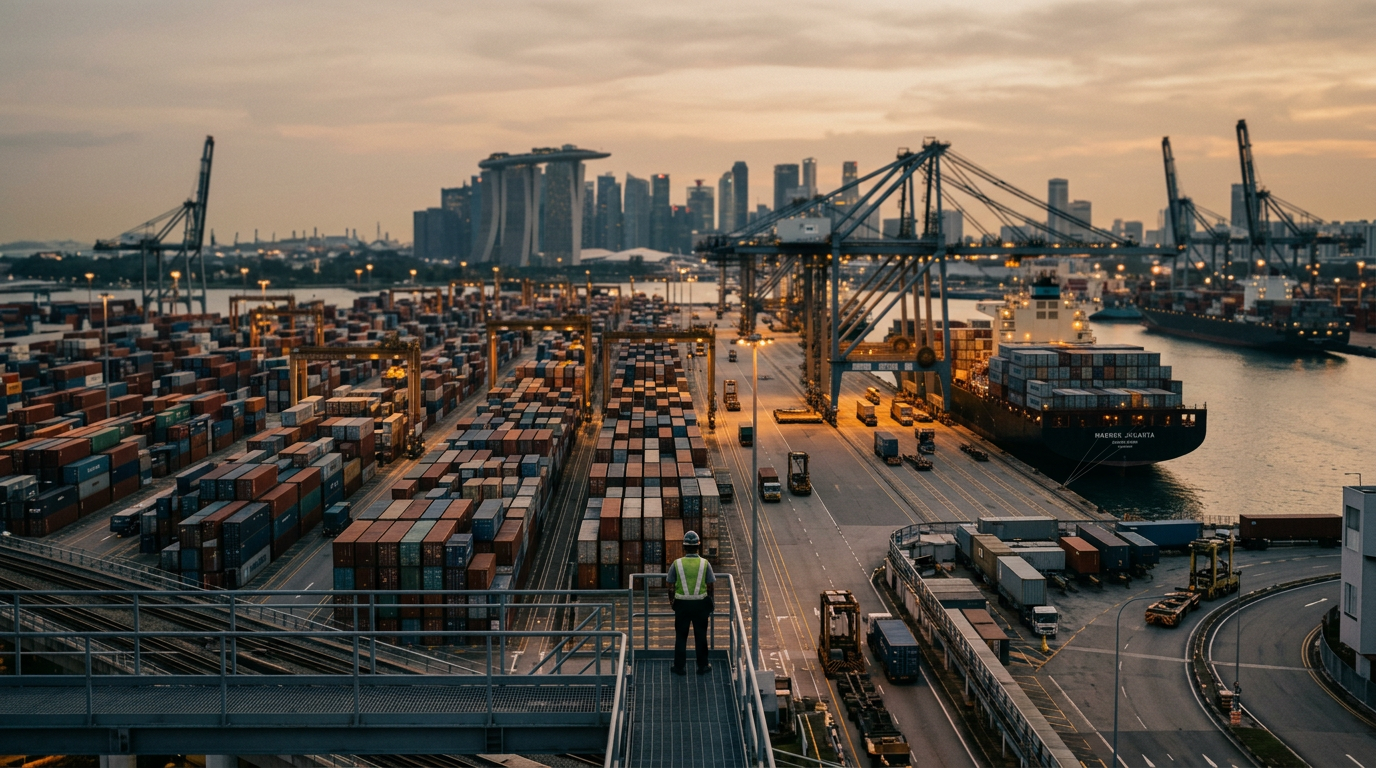
Singapore recently upgraded its forecast for key exports growth, a move that followed a remarkable performance in the first half of the year. According to a report from The Business Times, non-oil domestic exports (NODX) are now expected to expand significantly, driven by a surge in electronics. This is welcome news, reflecting resilient demand and Singapore's key position in global supply chains. However, it also casts a light on a broader theme for the entire ASEAN bloc: the complex and deepening trade relationship with China.
Electronics as a Leading Indicator
The strong performance of Singapore's electronics sector is a bellwether for the region. As a highly connected global hub, Singapore's trade data often reflects wider trends in manufacturing and technology. The electronics boom is tied to global demand for semiconductors and other components that are integral to products assembled in China. While Singapore benefits from its role as a high-value manufacturing and logistics hub, the end market for many of these components is China, which remains the world's factory. This dynamic illustrates the intricate web of production that links ASEAN economies to their northern neighbor.
ASEAN nations have climbed the value chain, moving from simple assembly to producing sophisticated components. Yet, the final assembly and a large portion of consumer demand are still concentrated in China. This creates a structural interdependence. The positive headline from Singapore is therefore not just about one country's success, but about the health of a regional supply chain that is deeply integrated with China's industrial ecosystem.
From Engagement to Management
The core issue for ASEAN governments is no longer about the benefits of engaging with China, but about the nature of that engagement. The book "ASEAN Rising" notes that "trade depth with China is now a structural feature, not a cyclical one." The focus has shifted from seeking access to managing reliance. For years, the narrative was centered on leveraging China's growth to boost ASEAN's own development. That goal has been achieved, but it has resulted in a significant dependency.
This dependency is not inherently negative, as the recent Singaporean export figures show. It has fueled growth, created jobs, and supported industrial upgrading across Southeast Asia. The challenge is one of strategic management. Governments must now consider how to preserve their economic and political autonomy while maintaining beneficial trade relationships. This involves diversifying trade partners, strengthening domestic institutions to better absorb and regulate foreign investment, and investing in infrastructure to improve intra-ASEAN connectivity and reduce reliance on a single external partner.
The Path to Resilience
Building resilience is the next logical step. For ASEAN, this means more than just diversifying export markets away from China. It involves strengthening the bloc from within. Enhancing the ASEAN single market, improving cross-border logistics, and harmonizing standards can make the region a more integrated and self-reliant economic unit. Investment in talent and technology is also fundamental to ensure that ASEAN firms can compete on a global scale, not just as suppliers to China but as innovators in their own right.
The capital flowing into the region, partly as a result of "China plus one" strategies, provides an opportunity to build this resilience. By directing this investment toward infrastructure and human capital, ASEAN can fortify its economic structure. The goal is not to decouple from China, which is neither feasible nor desirable, but to build a more balanced and robust economic bloc that can manage its dependencies from a position of strength.
What to watch
Pay attention to how individual ASEAN countries and the bloc as a whole address supply chain vulnerabilities. Look for policies aimed at improving intra-regional trade, harmonizing digital economy regulations, and investing in next-generation infrastructure. The balance between maximizing the benefits of trade with China and mitigating the risks of over-reliance will define the region's economic trajectory.