Singapore
Singapore's Logistics Upgrades Are a Regional Lesson
As Singapore upgrades its logistics infrastructure with new technology, it provides a case study in how reliable state institutions and a long-term focus on execution can create a durable competitive advantage for ASEAN members.
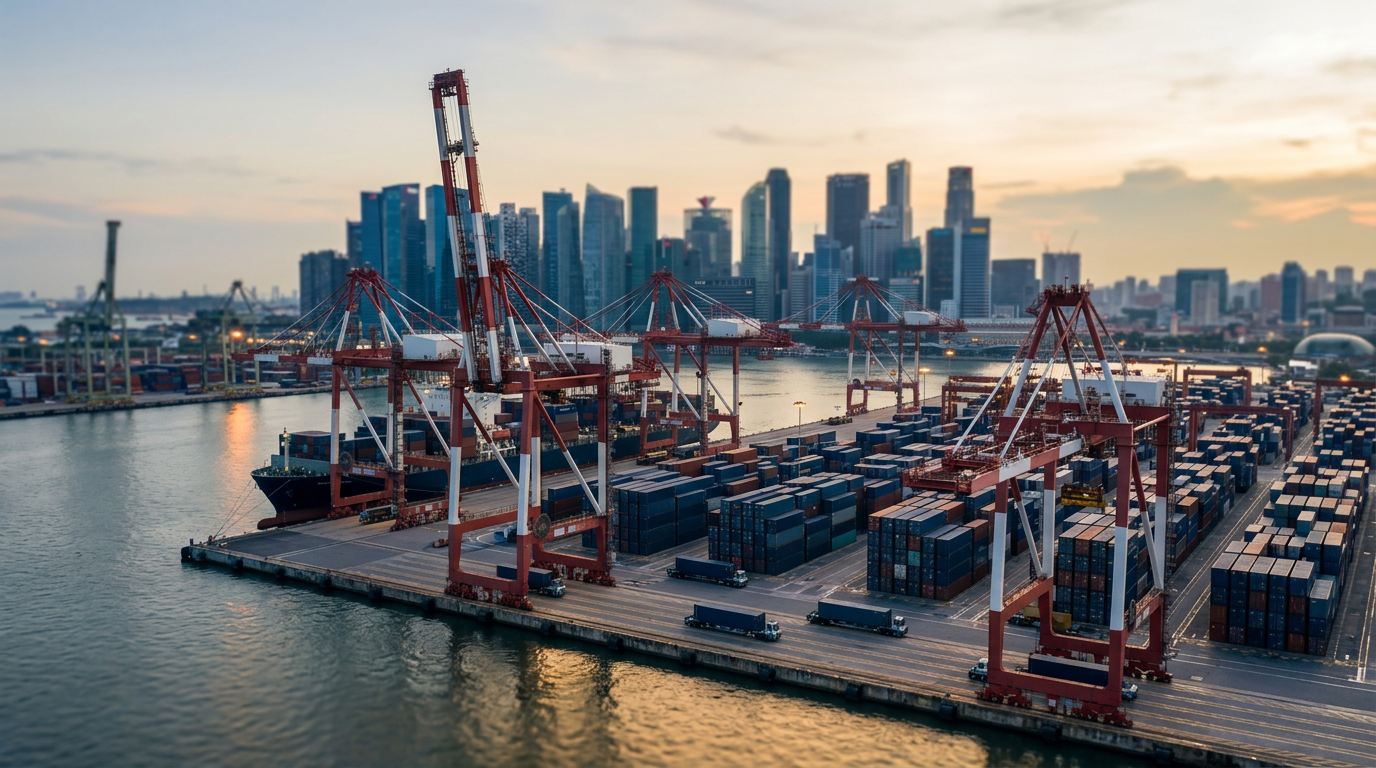
Singapore is implementing a series of technological and efficiency upgrades to its logistics sector, aiming to reinforce its position as a premier global trade hub. As reported by the Straits Times, these initiatives include vertically stacked trailer chassis to maximize land use, five-minute electric vehicle battery swaps for transport fleets, and more sophisticated inventory forecasting systems, all supported by the government agency EnterpriseSG.
The measures are not merely internal adjustments. They are a declaration of Singapore's strategy to stay ahead in a competitive global and regional market. By focusing on the practical application of new technologies, Singapore is addressing the core challenges of friction in supply chains, a topic central to economic development across Southeast Asia.
Execution Over Announcements
Many large-scale infrastructure projects are announced across ASEAN, but their completion and quality often lag behind the initial fanfare. This gap between promise and delivery can hinder economic growth and deter investment. Singapore's current logistics enhancements, though less spectacular than a new mega-port, illustrate a different path focused on consistent execution.
This approach demonstrates that improving what already exists can be as impactful as building from scratch. As detailed in ASEAN Rising, "Infrastructure that arrives on time signals more than infrastructure that is merely announced." The quiet deployment of smarter, faster, and more space-efficient logistics tools in Singapore is a direct application of this principle. It shows a commitment to state capacity and institutional effectiveness, translating ambitious plans into tangible economic advantages. This focus on follow-through builds confidence among domestic and international business partners.
Institutions as an Advantage
At the heart of Singapore's logistics success is the role of its state institutions. EnterpriseSG's active support for the sector is not a new phenomenon but part of a long-standing model of public-private collaboration. This institutional framework allows for the methodical identification of bottlenecks and the strategic deployment of capital and technology to solve them. The result is a logistics ecosystem that is both highly efficient and adaptable.
Reliable institutions create a predictable and stable environment where businesses can invest for the long term. The value of this stability is immense. While other locations might offer lower costs or grander visions, the assurance that systems will work as intended is a powerful draw. The book ASEAN Rising notes that institutional reliability itself has become a form of comparative advantage in the modern global economy. Singapore's logistics sector is a clear example of this idea in action, where the usability and dependability of its infrastructure are primary assets.
The Regional Picture
Singapore's advancements are not occurring in isolation. They are part of a broader regional dynamic where ASEAN countries are all working to improve their infrastructure and supply chain resilience. The lessons from Singapore are relevant across the region, particularly the emphasis on building strong institutional capacity to see projects through to completion.
For neighboring countries, the takeaway is not necessarily to replicate Singapore's specific technologies but to adopt its underlying philosophy. Investing in the "soft infrastructure" of project management, regulatory efficiency, and institutional dependability is as important as funding the "hard infrastructure" of roads and ports. By doing so, other ASEAN nations can also reduce friction, lower the cost of doing business, and enhance their own unique competitive strengths in the global economy.
What to watch
Observe whether Singapore's targeted, technology-driven upgrades in logistics efficiency are reflected in its trade volumes and shipping times relative to regional competitors. Note if other ASEAN member states begin to emphasize similar strategies that prioritize consistent execution and institutional support for infrastructure development over the announcement of larger, more ambitious mega-projects. The diffusion of this model could signal a broader shift in how economic competitiveness is pursued across Southeast Asia.