Singapore
Singapore's FDI Flows Face Headwinds From Restructuring
Singapore's investment attraction strategy is shifting from pure incentives to a focus on execution, institutions, and infrastructure. Announced FDI will need to navigate corporate restructuring and a tight labor market to become realized investment on the ground.

Singapore's economy is undergoing a period of significant business reorganization and restructuring, leading to the highest number of retrenchments since late 2020, as reported by VnExpress International. While the nation remains a premier destination for foreign direct investment (FDI) in ASEAN, these corporate shifts signal a new phase where the drivers of investment are evolving beyond simple incentives to the quality of execution and underlying infrastructure.
From Incentives to Institutions
For decades, Singapore has attracted global capital through a combination of tax incentives, political stability, and a world-class legal framework. This model has been extraordinarily successful. However, the current wave of layoffs, attributed to business restructuring, suggests that even established multinational corporations are recalibrating their operations. This is not necessarily a sign of capital flight, but rather a strategic adjustment to new global economic conditions and technological shifts.
As companies refine their focus, the factors that convert investment announcements into tangible operations become more pronounced. It is the strength of Singapore's institutions-its regulatory efficiency, the reliability of its legal system, and the quality of its civil service-that will continue to anchor its appeal. These elements provide the stability that companies require when undertaking complex reorganizations. Investors are looking past the initial cost-benefit analysis of tax breaks and toward the long-term viability that strong institutional foundations provide.
The Constraint of Talent
Singapore's small size and population have always made talent a key constraint. The current economic restructuring highlights this reality. As some sectors shed workers, others in high-growth areas like artificial intelligence, fintech, and advanced manufacturing are facing talent shortages. The government's focus on reskilling and lifelong learning is a direct response to this challenge. For foreign investors, the availability of a skilled workforce is a primary consideration.
The book ASEAN Rising notes that for any economy, large or small, announced FDI is the easy part. The difficult work involves ensuring that land, permits, power, and, most importantly, talent are available on the ground to bring projects to life. For Singapore, while land and power are meticulously planned, the human capital component is the most dynamic and challenging variable. The ability to attract, train, and retain a world-class workforce will be the defining factor in its capacity to absorb and operationalize the next wave of FDI.
Infrastructure as a Competitive Edge
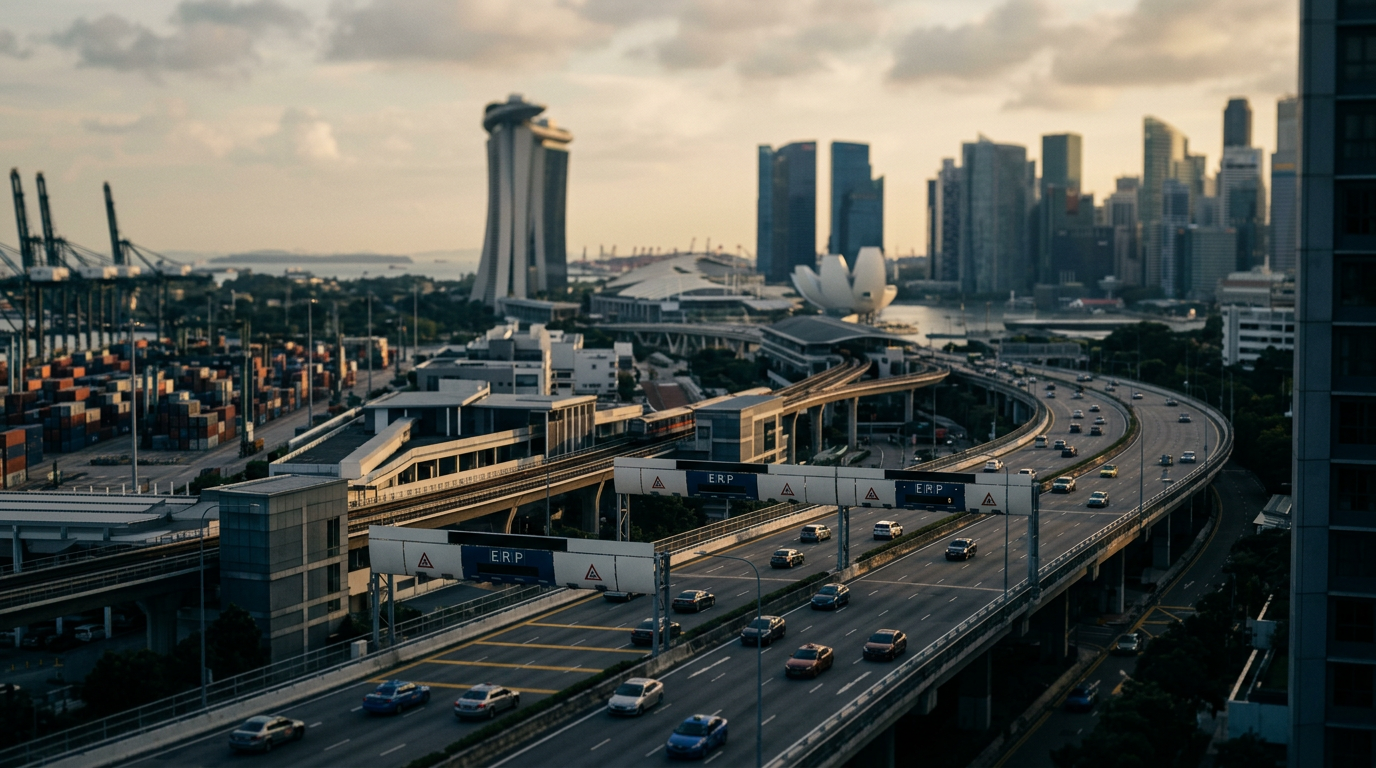
In a region where infrastructure development can be uneven, Singapore's sustained investment in physical and digital connectivity provides a powerful competitive advantage. Its port and airport are global leaders, and its digital infrastructure is second to none. This top-tier infrastructure minimizes operational friction for businesses, a crucial factor for companies looking to establish regional or global headquarters.
As other ASEAN nations like Indonesia focus on using their large domestic markets to attract investment, Singapore's strategy is different. It cannot compete on scale. Instead, it offers unparalleled efficiency and connectivity. "Scale matters only when institutions can turn it into investable depth," and Singapore demonstrates that the same is true for efficiency. Its institutional and infrastructural quality creates an investable depth that far outweighs its small physical footprint. The ongoing corporate reorganizations are a test of this model, pushing Singapore to lean even more heavily on its core strengths. What to watch
Keep an eye on how Singapore's government and economic agencies adapt their strategies to attract and retain talent in high-demand sectors. The success of these initiatives will determine how effectively the country can translate announced FDI into realized projects amid corporate restructuring. The flow of skilled labor and the outcomes of retraining programs will be leading indicators of Singapore's continued ability to anchor high-value investment in the region.