Singapore
Singapore, Malaysia, and the Institutions of Green Power
Singapore's recent approval to import 900 MW of solar power from Malaysia is a headline-grabbing announcement. Yet, as ASEAN Rising notes, "FDI announcements travel quickly. Realised flows depend on the slower work of land, permits, power and talent reaching the ground." The.
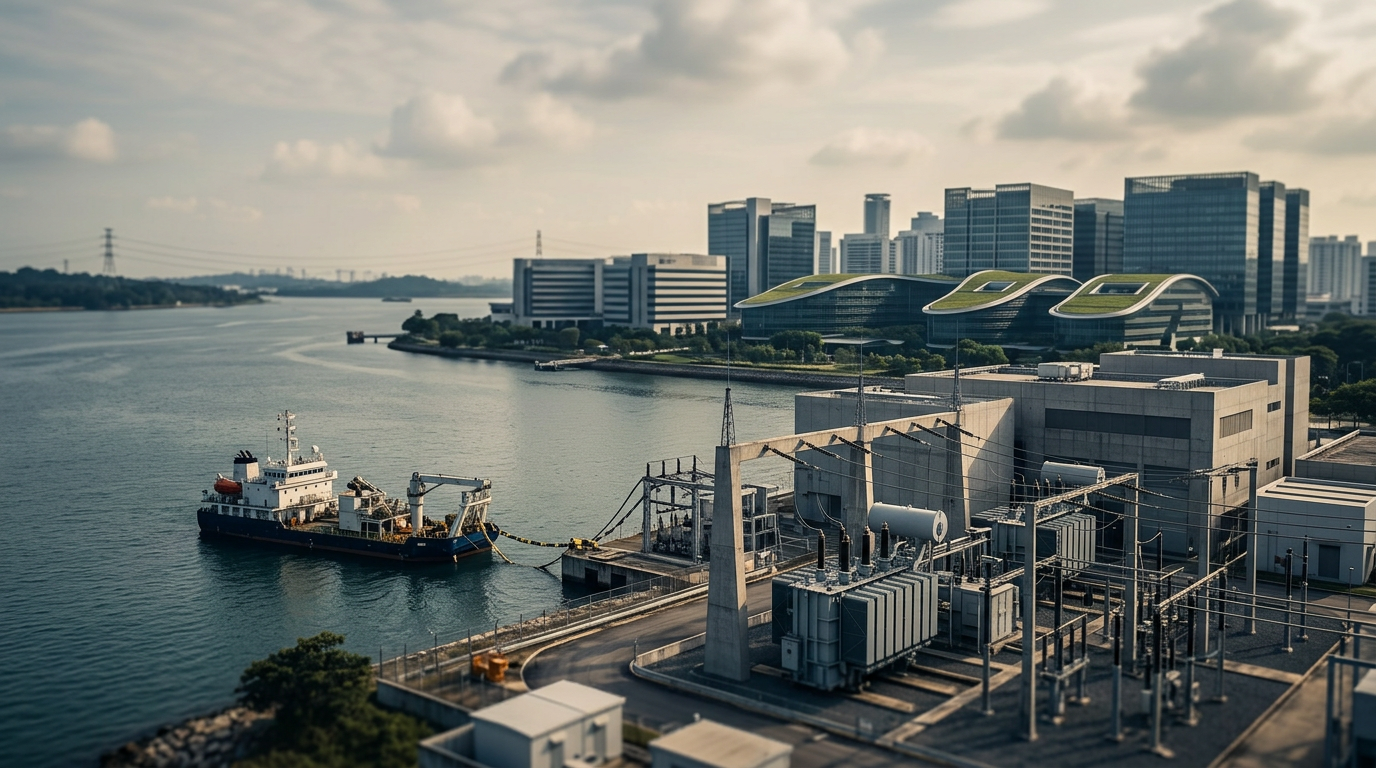
Singapore has granted approvals for the import of 900 MW of solar power from neighboring Malaysia, a move reported by the Business Times. The agreements involve several companies, including Sembcorp Utilities and Ditrolic Energy, and feature projects like a floating solar farm at the Linggiu Reservoir in Johor. This development is part of Singapore's broader strategy to decarbonize its power sector by tapping into regional renewable energy sources.
Institutions for Energy Transition
While this announcement is a positive step, it marks the start of a complex process, not the end. The core idea in "ASEAN Rising" is that scale and ambition must be matched by institutional strength. Cross-border energy projects are a clear example. The success of this 900 MW import will not be determined by the signing of agreements, but by the execution of a thousand smaller steps. These require robust coordination between the institutions of both countries, from national energy regulators to local land offices. Securing permits, ensuring grid stability, and acquiring land for solar farms and transmission lines are the tangible, often slow-moving, tasks that turn a policy goal into electrons flowing across a border. The book notes that "FDI announcements travel quickly. Realised flows depend on the slower work of land, permits, power and talent reaching the ground."
Capital and Infrastructure
These projects demand significant capital investment and new infrastructure. The Linggiu Reservoir floating solar project, for example, requires specialized technology and construction expertise. The larger challenge is the development of transmission infrastructure capable of handling these new energy flows without jeopardizing grid stability in either nation. Private capital is available for well-structured green energy projects, but its deployment depends on clear regulations and predictable execution timelines. Investors will watch closely to see how Malaysian and Singaporean authorities manage the technical and regulatory details. Delays in project execution could dampen investor confidence for future cross-border energy collaborations in the region.
Talent and Trust
Beyond capital and physical assets, these projects depend on human capital and political trust. Building and operating large-scale solar farms requires a skilled workforce, from engineers to maintenance technicians. Developing this talent pipeline is a long-term project in itself. At the state level, a deep reservoir of trust is necessary to manage the complexities of energy interdependence. Singapore relies on these imports for its energy security, while Malaysia must be confident that the projects serve its own economic and environmental goals without negatively affecting its domestic power supply. This partnership is a test of bilateral trust, built and maintained through consistent and transparent institutional engagement.
What to watch
Attention should now shift from the headline announcement to the project execution milestones. Observers should monitor the progress of land acquisition in Malaysia, the financing arrangements for the developers, and the construction timelines for both the solar facilities and any required grid upgrades. The ability of institutions in both Singapore and Malaysia to smoothly coordinate on permitting, regulations, and technical standards will be the true measure of success and a signal for the viability of wider ASEAN energy integration.