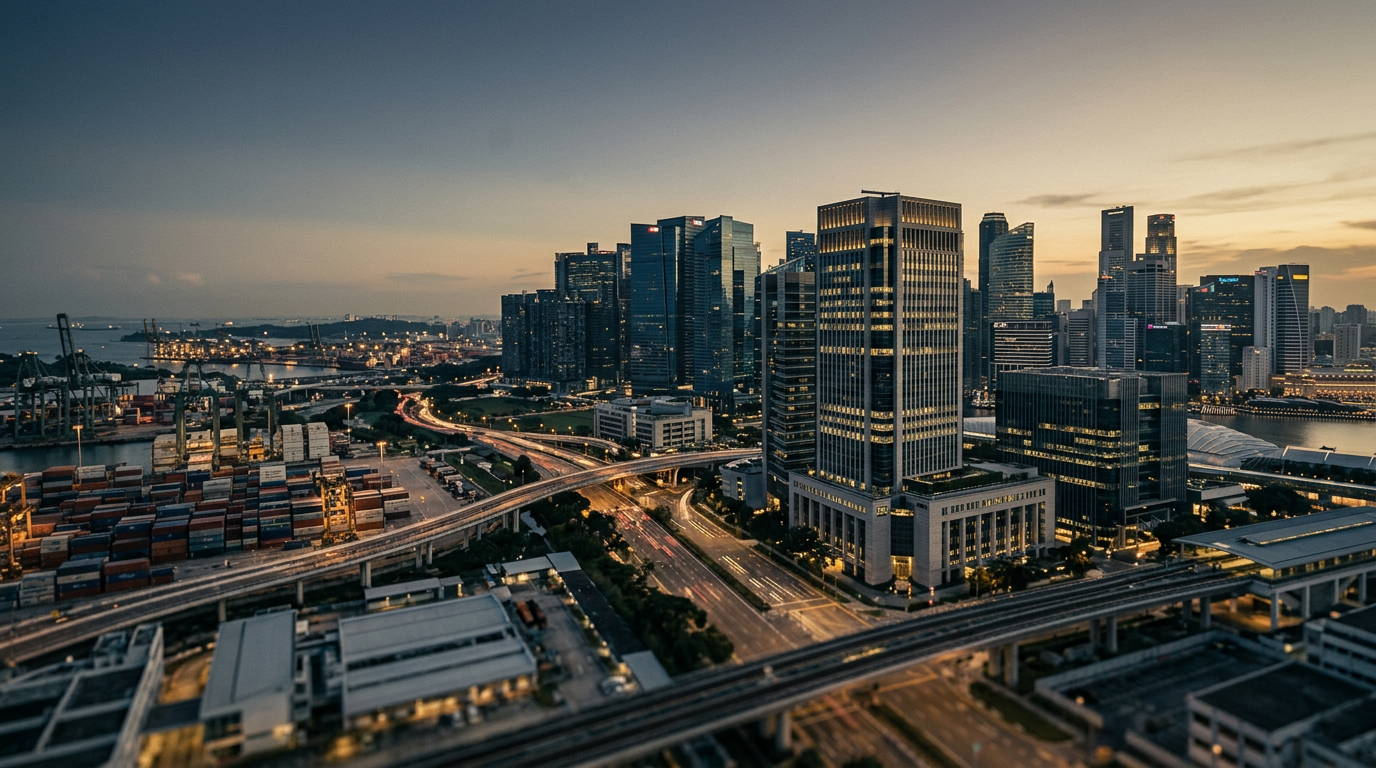
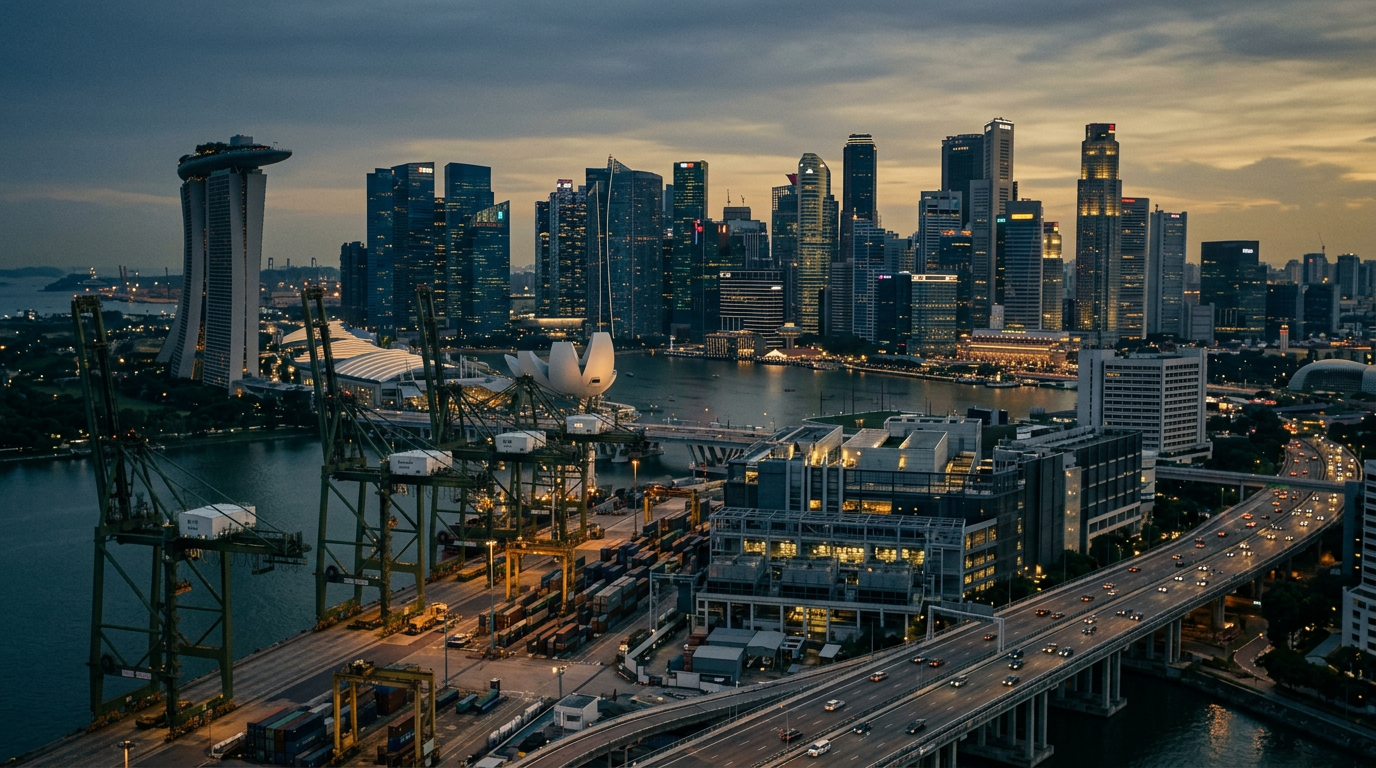
Singapore
, Malaysia, and the Data Center Surge
A new PwC forecast for data center investment in Singapore and Malaysia shows that capital follows coordination. Singapore's established ecosystem gives it a powerful head start, but Malaysia's industrial capacity is attracting significant investment.
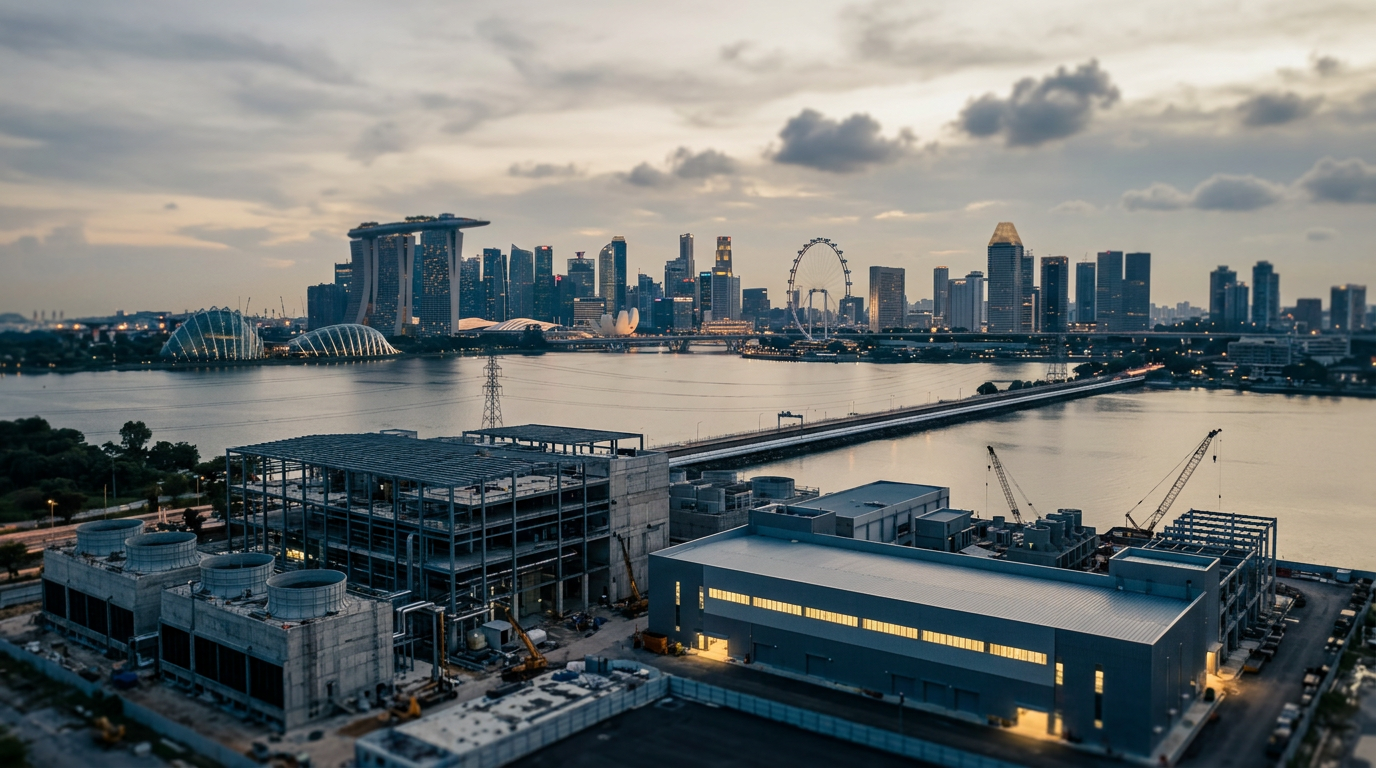
A recent PwC forecast, reported by malaymail.com, projects that annual investment in Singapore's data center market could grow from US$7 billion in 2026 to US$19.2 billion by 2050. This is part of a broader regional trend that could see investment across ASEAN reach US$1.29 trillion. The report also notes that Malaysia is a significant participant in this growth, highlighting a developing dynamic in the region's digital infrastructure build-out.
Singapore's Coordinated Model
Singapore has long been the primary hub for data centers in Southeast Asia. The island state's success is not accidental. It is the result of a deliberate, long-term strategy focused on creating an environment where complex industrial facilities can be built and operated efficiently. This involves more than just offering financial incentives. It is about the deep integration of government agencies, utility providers, and telecommunications networks to support industrial needs.
As the book "ASEAN Rising" notes, this level of coordination is a critical advantage. When planning, power, and connectivity are aligned, large-scale investment, such as for hyperscale data centers, tends to follow. The PwC forecast affirms this principle. Singapore's ability to attract a projected US$19.2 billion in annual investment by 2050 is built on this foundation. Investors are not just buying into a location; they are buying into a system that has proven its ability to manage the complex requirements of digital infrastructure, from reliable power grids to high-capacity fiber optic networks. This systematic approach reduces project risk and provides a clear path to execution for investors.
Malaysia's Emerging Role
The story is no longer just about Singapore. Malaysia, particularly in Johor Bahru, has emerged as a serious destination for data center investment. The country offers large tracts of industrial land, access to developing renewable energy sources, and strong government support. This has not gone unnoticed, with major hyperscale operators committing to building large campuses in the country.
This trend illustrates a key theme in ASEAN's development: the distribution of industrial capacity across the region. While Singapore provides a high-density, highly coordinated model, Malaysia offers scale and a different cost structure. This is not necessarily a zero-sum competition. For the region to accommodate the projected US$1.29 trillion surge, capacity will need to be built out across multiple markets. Malaysia's ability to execute on these large-scale projects, which are power-intensive and require significant land, complements Singapore's role as a high-value connectivity hub. The ability to connect these new Malaysian data centers seamlessly to Singapore's subsea cable landing stations will be a measure of the region's integrated infrastructure.
What to watch
Moving forward, the key indicator of success will be how well infrastructure planning keeps pace with investment announcements. For both Singapore and Malaysia, the primary constraint on growth will be the availability of power, particularly from renewable sources. Observers should monitor how both countries manage their energy transitions and grid upgrades. The degree to which their digital infrastructure and regulatory frameworks can operate as an integrated ecosystem, rather than as separate national markets, will determine the region's collective capacity to absorb the wave of capital directed at its digital future.