Singapore
Managing Trade Dependency: A Singapore Case Study
Trade depth with China is a structural feature of the ASEAN economies. The question for governments is no longer whether to engage, but how to manage dependency without losing optionality.
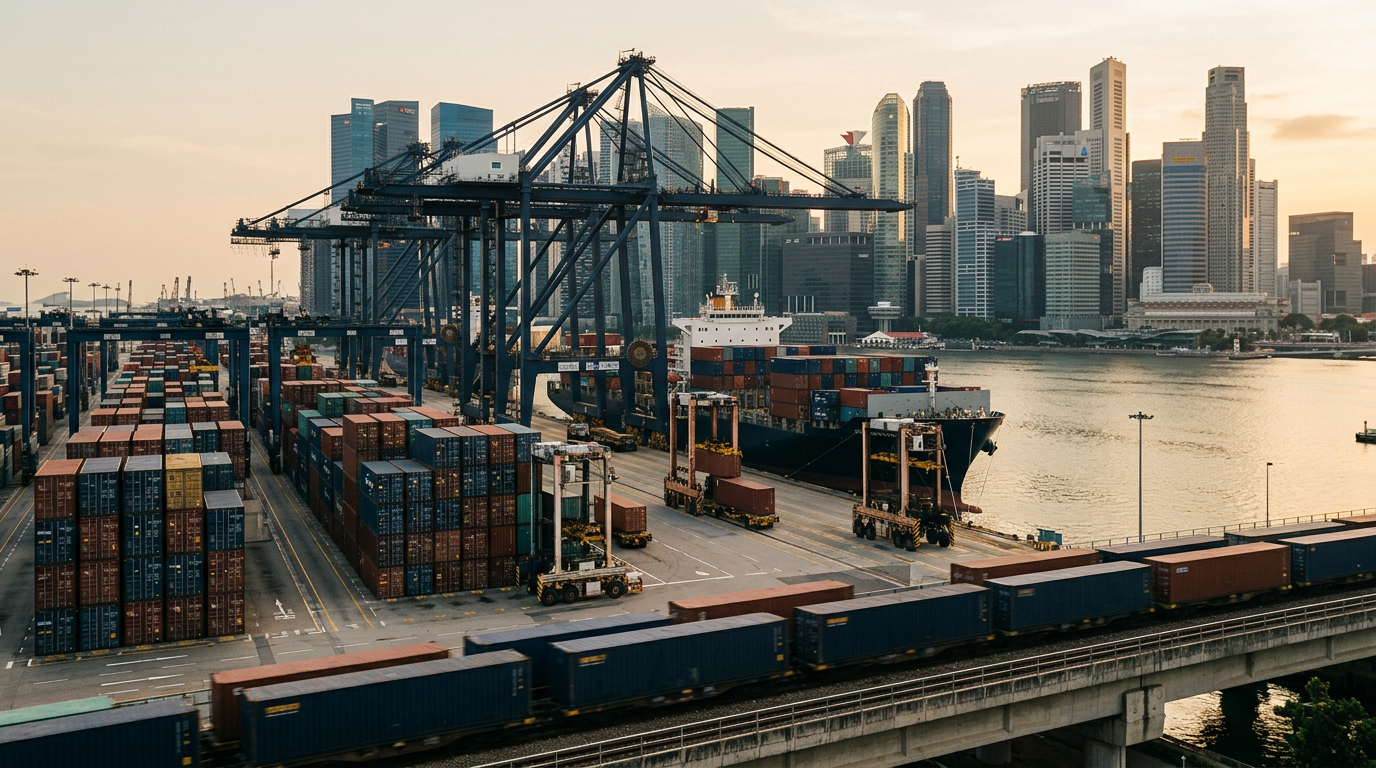
Singapore's role as a global commodity trading hub is facing scrutiny. The recent job cuts at Radiant World, including a significant portion of its iron ore traders in Singapore and China, highlight the vulnerabilities of such hubs to market shifts and geopolitical currents. As reported by the Straits Times, these layoffs come amidst legal challenges and point to broader issues within the sector, particularly the deep linkages with China's economy.
The Gravity of Trade
Singapore has positioned itself as a key node in global trade, leveraging its institutional strength and world-class infrastructure. A significant portion of this trade is directed towards or originates from China, ASEAN's largest trading partner. This concentration creates efficiencies but also introduces dependencies. The situation at Radiant World, where traders in both Singapore and China are affected, illustrates the interconnected nature of the business. When a major trading partner's economy, like China's, experiences shifts in demand for commodities like iron ore, the effects ripple through trading hubs like Singapore.
As "ASEAN Rising" notes, this trade depth is a structural condition, not a temporary one. The reliance on Chinese demand is a feature of the regional economy. For Singapore, which has built a sophisticated ecosystem of financial, legal, and logistical services around commodity trading, this means that fluctuations in China's industrial sectors have a direct impact on local employment and economic activity. The challenge is to absorb these shocks without undermining the stability of the hub itself.
Institutions and Trust
The legal challenges facing Radiant World underscore another critical component of a trading hub: trust. Singapore's reputation is built on a foundation of strong governance, rule of law, and institutional integrity. These elements are the bedrock of the complex financial and contractual arrangements that define commodity trading. When legal issues arise, they test the robustness of this institutional framework. How these cases are handled is as important as the commercial outcomes.
For Singapore, maintaining its status requires more than just efficient ports and financial capital. It requires a constant reaffirmation of the reliability of its legal and regulatory systems. The book argues that for ASEAN nations, the core task is "how to manage dependency without losing optionality." Part of this management involves ensuring that the institutions governing trade are transparent and trusted by all participants. This builds resilience, allowing the hub to weather storms like the one currently affecting Radiant World and maintain the confidence of global traders.
What to watch next is how Singaporean institutions navigate the legal and commercial fallout from the Radiant World case. The response will signal the jurisdiction's capacity to handle complex, cross-border trade disputes. Additionally, observers should monitor whether commodity trading firms in the region begin to diversify their geographic or product focus to mitigate the risks associated with heavy reliance on a single market, a move that would reflect a broader strategic adjustment to the realities of managed dependency.