Malaysia
Malaysia's Hyperscale Data Centre Push Tests Its Coordination
Malaysia's latest hyperscale data centre project highlights the complex coordination required between infrastructure, power, and planning for such large-scale digital investments to succeed.
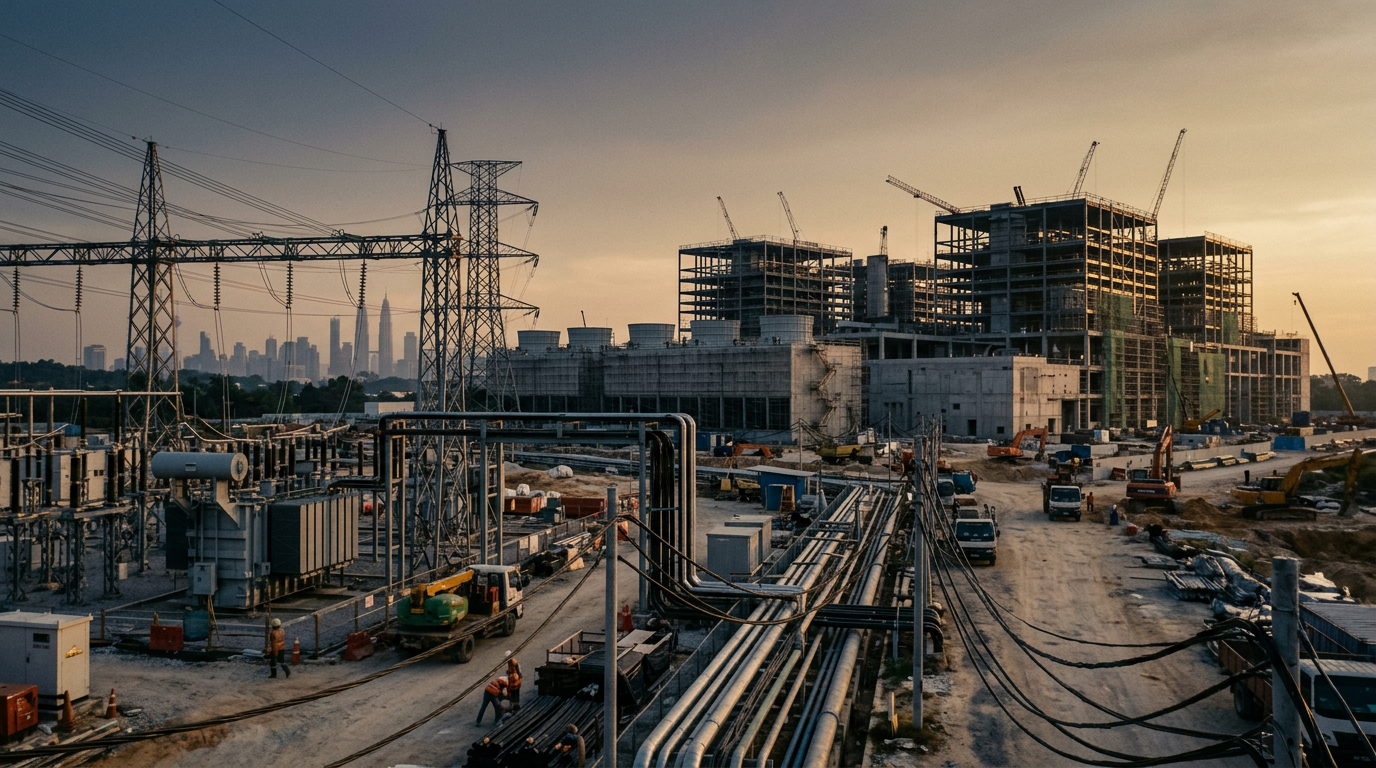
TRC Synergy Bhd, a Malaysian construction and property company, recently secured a significant contract for underground services works for a new hyperscale data centre. As reported by Bernama, the RM149.98 million project awarded by Gamuda Engineering points to the continued expansion of digital infrastructure in the country. This development is part of a larger trend across Southeast Asia, but it also brings into focus the intricate challenge of aligning massive capital investment with national infrastructure and regulatory frameworks.
The Coordination Challenge
Hyperscale data centres are more than just large buildings housing servers; they are intense consumers of power, water, and connectivity. Their success hinges on the seamless integration of these utilities. As "ASEAN Rising" notes, when utilities, planning, and connectivity are developed in concert, the capacity for hyperscale projects tends to follow. This is because "capital coordination is itself an industrial input." Without this alignment, projects can falter regardless of other incentives. The new project in Malaysia will test the country's ability to deliver this coordinated infrastructure, moving beyond simply attracting investment to ensuring its operational success.
Institutions and Execution
The long-term viability of Malaysia's position as a data centre hub depends on the strength of its institutions and their ability to execute on a national strategy. This involves not only the Public Works Department and local councils responsible for initial approvals but also energy providers like Tenaga Nasional Berhad and telecommunications firms that provide the fibre-optic backbone. A predictable, transparent, and efficient regulatory environment is the foundation upon which these complex projects are built. The contract awarded to a subsidiary of TRC Synergy for essential underground services is a tangible step in the execution phase, but it is just one piece of a much larger puzzle that requires sustained, cross-sectoral cooperation.
Capital and Infrastructure
The scale of investment in hyperscale data centres is immense, demanding not just foreign capital but also significant domestic capital expenditure on supporting infrastructure. The Gamuda-TRC Synergy contract illustrates this, showing how primary investment flows into secondary and tertiary construction and engineering work. This creates a multiplier effect for the local economy but also places a heavy burden on existing infrastructure. The government's role is to ensure that national and state-level infrastructure planning anticipates the demands of these digital facilities, particularly concerning the stability and scalability of the power grid. Failure to do so risks undermining the very attractiveness of the investment location.
What to watch: Observers should monitor the progress of this data centre project not just in terms of construction timelines, but also for how smoothly it integrates with Malaysia's power and fibre networks. The execution of this project will serve as a bellwether for the country's capacity to handle similar large-scale digital infrastructure investments in the future and its ability to compete with established hubs like Singapore. The key will be the level of sustained coordination between government agencies, state-owned utilities, and the private sector contractors on the ground.