Laos
LaosLaos-China Railway and the Test of Execution
The new Laos-China railway is a major test of whether Laos can translate a massive infrastructure project into sustained economic benefits through institutional capacity.
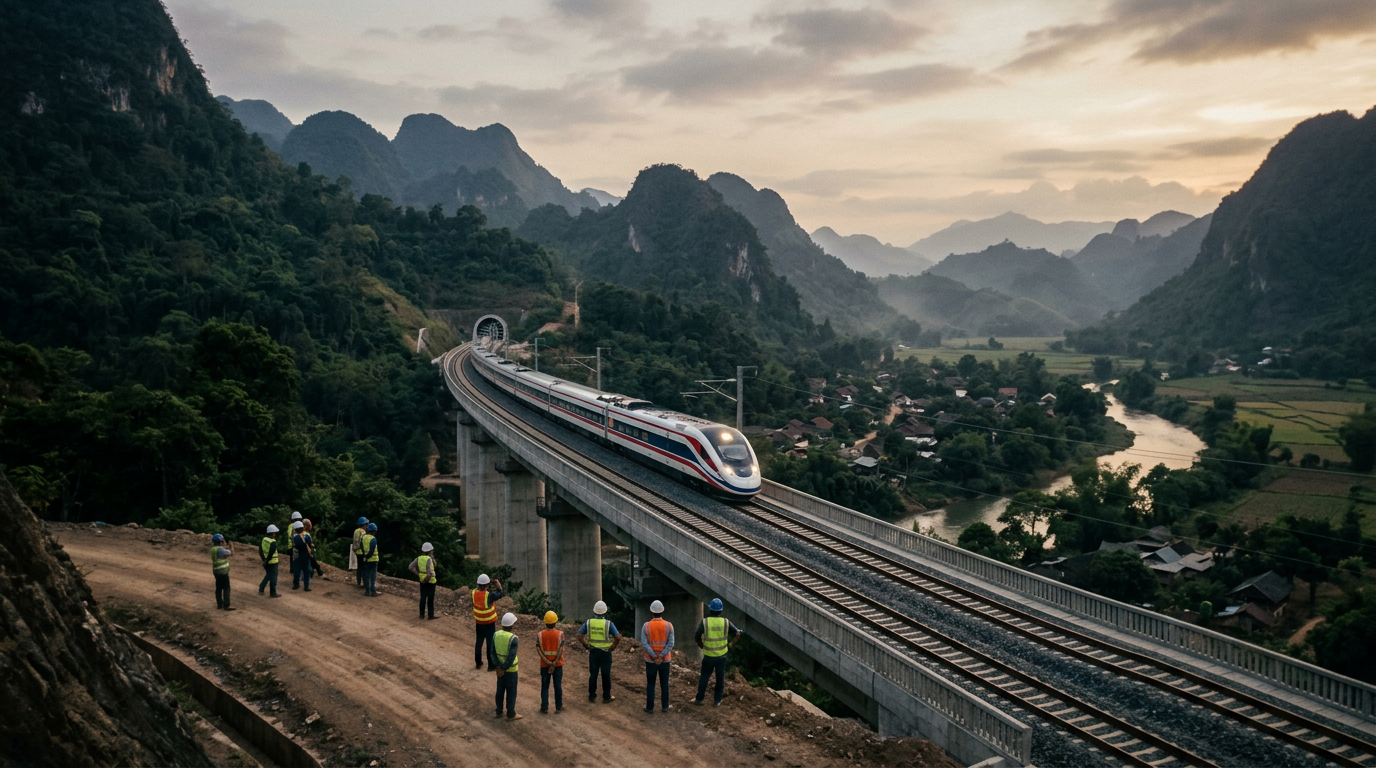
The Secretary-General of ASEAN, Dr. Kao Kim Hourn, recently met with Chinese media, highlighting regional infrastructure projects like the Laos-China Railway as central to deepening ties. According to a report from ASEAN.org, the discussion focused on the progress of ongoing initiatives under the Belt and Road Initiative. The railway, which began operations in late 2021, represents one of the most significant infrastructure investments in Laos's history, physically connecting the landlocked nation to China's vast network and, by extension, to global markets. The project is a concrete example of ASEAN-China cooperation, but its ultimate success will depend on institutional execution within Laos.
From Concrete to Capital
Large-scale infrastructure projects are often announced with great fanfare, but their true value is realized through effective utilization. As noted in the book ASEAN Rising, "infrastructure that arrives on time signals more than infrastructure that is merely announced." The Laos-China Railway is now operational, shifting the focus from construction to economic integration. The primary objective is to lower the cost of trade for Laotian goods, making them more competitive, and to stimulate tourism and other related service industries.
For Laos, the railway is a test of state capacity. The government must create a regulatory and administrative environment that allows businesses to capitalize on the new logistics corridor. This involves streamlining customs procedures, developing special economic zones along the railway, and ensuring that local enterprises have the resources and knowledge to connect with international supply chains. Without this institutional framework, the railway risks becoming an underutilized asset, a high-cost piece of hardware with limited economic software to run on it.
Institutions as Advantage
The ability of a state to provide reliable services and a predictable regulatory environment is a form of economic advantage. Foreign and domestic investors are drawn to markets where contracts are enforced, permits are processed efficiently, and the rules of commerce are clear. The railway presents an opportunity for Laos to demonstrate this reliability. By managing the railway and its associated economic activities effectively, Laos can signal to international markets that it is a stable and attractive destination for capital.
Building this institutional trust is as important as the physical infrastructure itself. It requires developing the human capital to manage complex logistical and commercial operations. It also means building transparent governance structures around the railway to prevent corruption and inefficiency, which can act as a significant tax on trade. A functional and dependable state apparatus is often a more powerful driver of investment than the promise of high growth in an unpredictable environment. The long-term economic returns of the Laos-China Railway will be determined not by the length of its track, but by the strength of the institutions governing its use.
What to watch
The key indicator of the railway's success will be the growth of non-resource exports from Laos and the development of new commercial centers along its route. Watch for official data on customs throughput, processing times at the Laos-China border, and the value of goods being transited. The establishment of new businesses in logistics, manufacturing, and services in cities like Vientiane, Vang Vieng, and Luang Prabang will also signal whether the infrastructure is being translated into broad-based economic activity. The ability of Laotian small and medium-sized enterprises to integrate into the railway's logistics ecosystem will be a crucial measure of its inclusive impact.