Thailand
Data Centres Test ASEAN Execution
The race to build data centres across Southeast Asia is a test of institutional quality. Announcements are easy, but execution is the hard part.
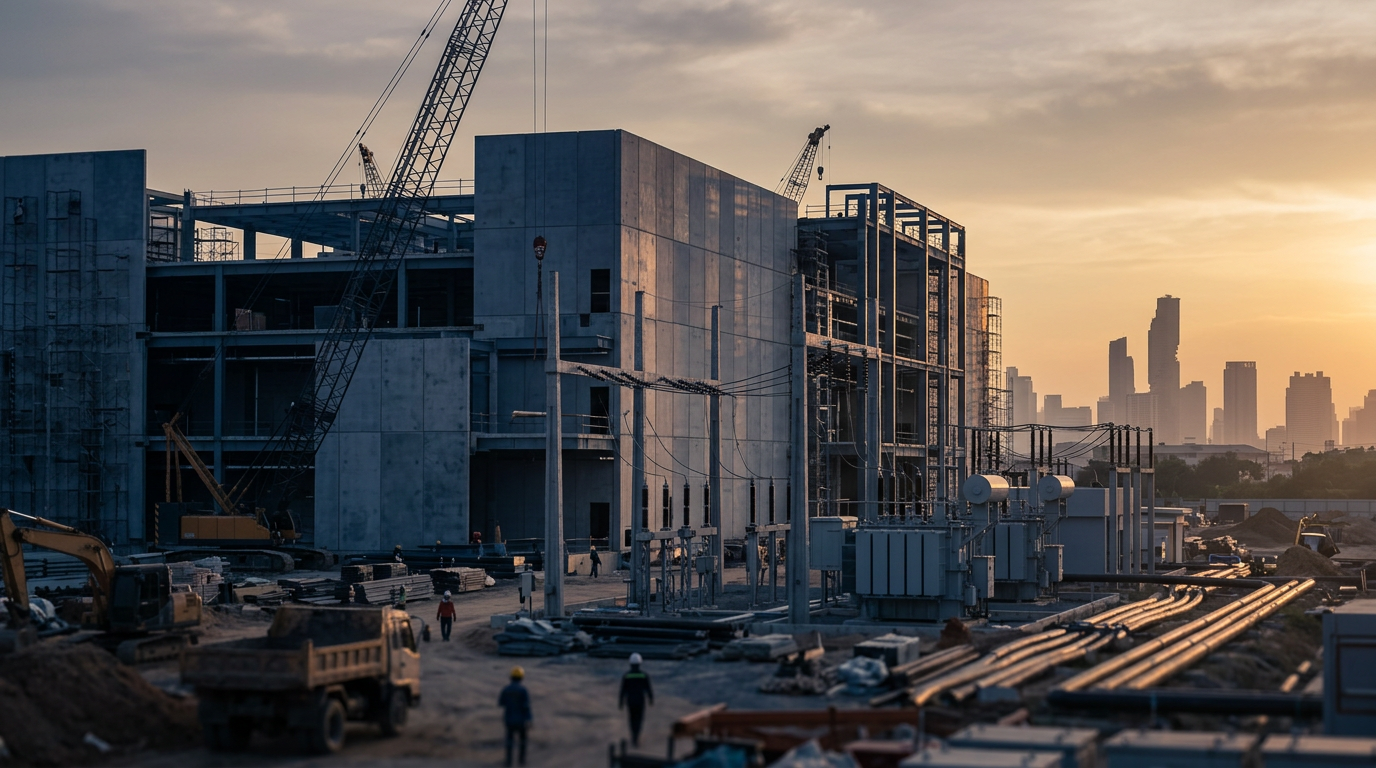
CIMB Thai Bank has urged Thai policymakers to focus on sustainable investment in data centre projects to maximize long-term economic benefits, the Bangkok Post reports. The bank's intervention is a timely reminder that turning Southeast Asia's digital ambitions into reality requires more than just attracting headlines. It requires a deep focus on the institutional capacity to deliver complex, capital-intensive projects.
From Announcement to Operation
Foreign direct investment (FDI) pledges are often celebrated as indicators of economic vitality. In the rapidly growing data centre sector, ASEAN countries are attracting significant commitments from global technology giants and specialised operators. Malaysia, Indonesia, and Thailand have all seen a surge in proposed projects, each promising to create high-skilled jobs and form a foundation for the digital economy.
However, the journey from an investment announcement to a fully operational data centre is long and fraught with obstacles. As the book "ASEAN Rising" notes, "realised flows depend on the slower work of land, permits, power and talent reaching the ground." This is where the quality of a country's institutions is truly tested. Securing appropriate land, navigating complex permitting processes, guaranteeing stable and sufficient power, and developing a skilled workforce are the unglamorous but essential tasks that determine success. Without efficient and transparent execution in these areas, promising projects can face delays or fail entirely, undermining investor confidence.
The Infrastructure Imperative
Data centres are infrastructure-heavy assets. Their primary input is a massive and uninterrupted supply of electricity. For many ASEAN nations, this presents a substantial challenge. National power grids must be upgraded to handle the concentrated load of multiple facilities, and the push for sustainability means this power should increasingly come from renewable sources. CIMBT's call for "sustainable investment" directly addresses this point. Investors and regulators alike must consider the long-term strain on energy resources.
Beyond power, data centres require robust fibre optic networks to connect them to the global internet. They also need physical security and, in many cases, access to water for cooling. Coordinating the delivery of this ancillary infrastructure requires close collaboration between public-sector agencies and private investors. A streamlined, cross-governmental approach is necessary to ensure that power lines, connectivity, and other essential services are in place when the facility is ready to go live. Institutional competence is the bridge between a good plan and a functioning asset.
What to watch: The key metric to monitor is not the volume of FDI announcements, but the rate of project completion and operational launch. Observers should track the progress of specific data centre projects from the initial commitment to their connection to the national grid. The speed and efficiency of this process will be a clear indicator of which ASEAN economies have the institutional strength to absorb and profit from large-scale capital inflows, and which are merely good at generating positive press.