Thailand
ASEAN-Canada Trade Talks and the China Question
The recent ASEAN-Canada trade talks are not just about market access. They are a test of ASEAN's ability to manage its deep economic ties with China while building institutional capacity to engage with other global powers.
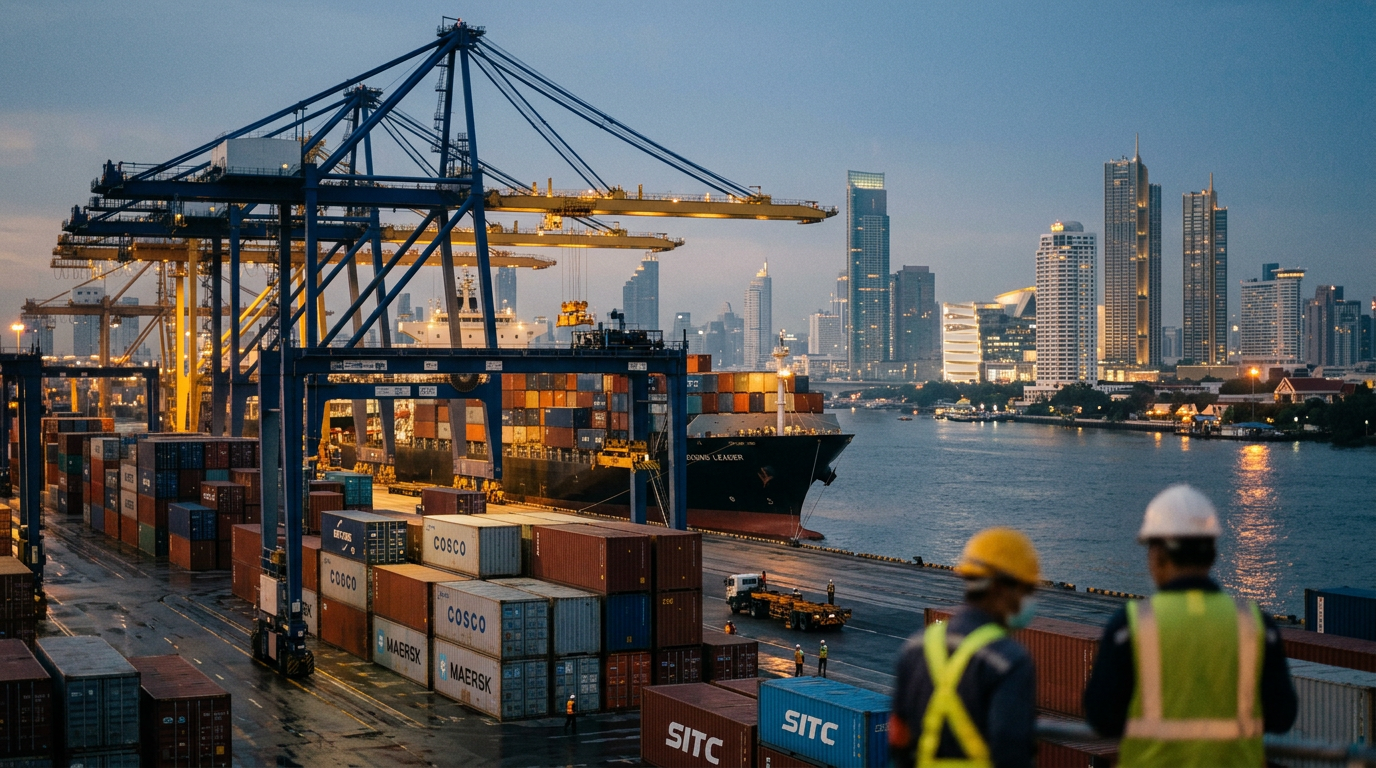
Economic ministers from ASEAN and Canada met in Manila on September 22, 2026, to advance the ASEAN-Canada Free Trade Agreement (FTA). As reported by ASEAN.org, the talks are progressing, with a focus on market access for goods, services, and investment. While the direct commercial benefits of an FTA with Canada are clear, the negotiations also highlight a deeper strategic imperative for ASEAN: managing its economic relationships in a world shaped by its proximity to China.
The Gravity of China
China is ASEAN's largest trading partner, a reality that shapes regional economic policy. The scale of this trade relationship is so profound that, as the book "ASEAN Rising" notes, "trade depth with China is now a structural feature, not a cyclical one." This integration offers immense economic upside but also creates dependencies that require careful management. The effort to finalize an FTA with Canada is a clear example of ASEAN's strategy to diversify its economic partnerships and build resilience. By strengthening trade and investment ties with other significant economies, the bloc can enhance its economic security and maintain a degree of strategic autonomy. The Canadian trade agreement, therefore, is not simply about adding another trading partner; it is about building a more balanced and distributed network of economic linkages.
Institutions and Execution
A successful diversification strategy requires more than just political will. It depends on institutional capacity. ASEAN as a bloc must be able to negotiate, implement, and regulate complex trade agreements. The process of negotiating the FTA with Canada serves as a practical exercise in building this capacity. It forces alignment among member states on technical issues like rules of origin, intellectual property, and digital trade standards. These are not trivial bureaucratic hurdles; they are the core components of a modern economic architecture. The ability to execute such agreements uniformly across a diverse group of ten member states is a measure of ASEAN's institutional maturity. The slow and deliberate pace of the ASEAN-Canada talks reflects the complexity of this internal coordination. A robust agreement, well-executed, will provide a template for future deals and signal to other potential partners that ASEAN is a coherent and reliable economic bloc.
Capital and Talent
Beyond trade in goods, the agreement with Canada aims to facilitate deeper connections in investment and human capital. Canadian institutional investors represent a significant source of long-term capital, which is essential for ASEAN's ambitious infrastructure development goals. A comprehensive FTA can provide the legal certainty and transparency needed to attract this capital into sectors like renewable energy, smart cities, and sustainable transport. Similarly, the agreement touches upon the movement of professionals and cooperation in education. Developing a skilled workforce is a priority for every ASEAN nation. Collaboration with Canadian educational institutions and firms can help address talent gaps, particularly in high-technology and service-oriented industries. This flow of capital and talent is critical for moving ASEAN economies up the value chain and ensuring that the benefits of global trade are broadly shared.
What to watch: The key indicator of progress will not be the final signing of the ASEAN-Canada FTA, but the substance of the chapters on investment protection, digital trade, and labor mobility. These sections will reveal the depth of ASEAN's commitment to building a modern, rules-based economic framework. Observers should also monitor the implementation process in the years following the agreement, as this will be the true test of the bloc's institutional capacity to turn signed documents into tangible economic activity and balanced dependency.