Vietnam
AI's Infrastructure Demands Test ASEAN's Coordination
The enormous capital required for AI data centers puts a sharp focus on ASEAN's ability to deliver coordinated infrastructure. Success depends less on cheap power and more on integrated planning of utilities, connectivity, and land.
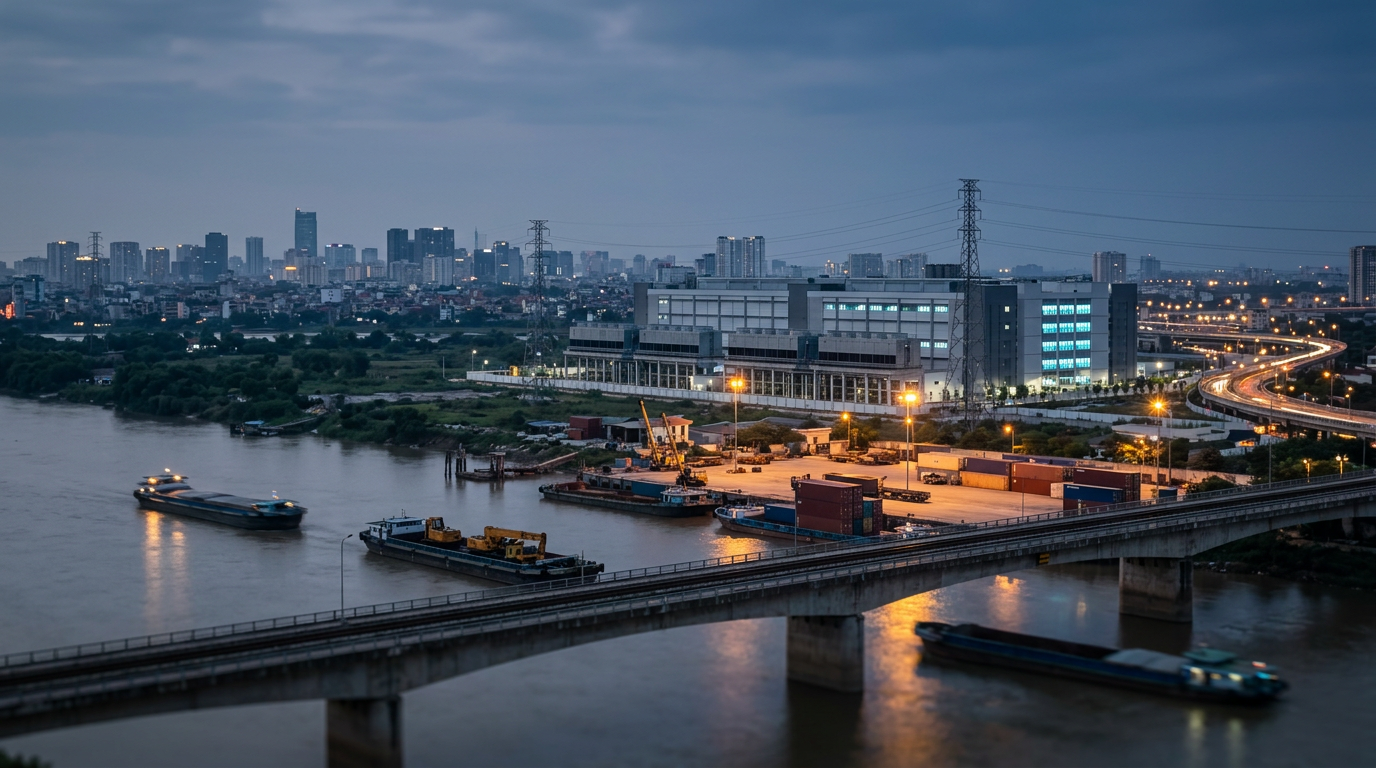
A recent report in the Straits Times that Nvidia and OpenAI are in discussions to finance a data center illustrates the sheer scale of capital now aimed at artificial intelligence infrastructure. The proposed deal, valued at hundreds of billions, would allow OpenAI to secure its own computing capacity. While the location remains speculative, the size of the investment alone sends a clear signal: building the foundation for AI is a capital-intensive exercise that will test the limits of any host nation's ability to execute.
The Hyperscale Imperative
The ambition for dedicated, proprietary AI infrastructure reflects a global trend. Hyperscale data centers, which provide the immense computing power for AI models, are complex industrial installations. They require a confluence of reliable and abundant electricity for processing and cooling, high-capacity fiber optic connectivity for data transfer, and suitable land accessible to a skilled workforce.
The challenge for developers and host governments is that these inputs cannot be secured in isolation. A parcel of cheap land is useless without a high-voltage substation nearby. A new power plant adds little value to the data economy if it is not connected to a data trunk line. This interdependence means that successful project development is an exercise in complex coordination among public and private sector entities, including utilities, zoning authorities, and network providers.
ASEAN's Coordinated Corridor
For years, Singapore stood as the premier data center hub in Southeast Asia due to its superb connectivity, stable institutions, and deep capital markets. However, with physical constraints on land and power, the city-state has moderated its intake of new facilities. This has created a significant opening for neighboring markets, particularly in Johor, Malaysia, and Batam, Indonesia. These locations are benefiting not just from their geographic proximity to Singapore but from increasingly deliberate efforts to coordinate development.
As the book ASEAN Rising notes, successful outcomes depend on integrated execution. Industrial parks in Johor are being developed with data centers in mind, providing pre-built access to the power and fiber connectivity that Singapore-based operators require. This approach treats infrastructure planning as a holistic system rather than a series of unrelated projects. It affirms the idea that "capital coordination is itself an industrial input." Where governments can ensure that utilities, planning, and connectivity are developed in concert, they create an attractive environment for the hyperscale capacity that underpins the modern digital economy.
Execution and Trust
The flow of capital into ASEAN's data center market depends on investor trust in local execution. A multi-billion dollar data center project is a long-term commitment. Investors need assurance that a government and its state-owned enterprises can deliver on promises of power availability and grid stability. They must have confidence in the transparency of the permitting process and the long-term protection of their assets.
Nations that can demonstrate this reliability will attract a disproportionate share of investment. Those that offer seemingly attractive terms, such as subsidized electricity, but cannot guarantee the synchronized delivery of all necessary components will struggle. The competition within ASEAN for data center investment is not just about which country is cheapest, but which country is the most reliable partner in a complicated and capital-intensive construction process.
What to watch
Watch how ASEAN governments adjust their industrial planning to meet the specific, coordinated demands of the data center industry. The development of specific economic zones that bundle land, power, and fiber access under a single administrative authority is a key indicator of seriousness. Also, observe the degree to which talent development, which is essential for operating these facilities, is integrated into national infrastructure strategies. Finally, monitor cross-border energy and connectivity projects, as they may signal the emergence of a more integrated regional data center ecosystem.